- Writing a Book – Marketing And Promotion http://t.co/ETqzeW5 via @chrisbrogan ->
- Writing a Book – Making Money http://t.co/LjFqWx1 via @chrisbrogan ->
- The future of tablet computing (as envisioned in 1994) http://t.co/H0ktVJh ->
- Tough going for HP Touchpad http://t.co/XX3ORiT http://t.co/3yhWu8L http://t.co/npE3Qcw http://t.co/Bc1jaYT ->
- Rebranding Hell – A Case Study 🙂 http://t.co/Ov39GvF ->
- RT @dharmesh: @HubSpot Buys Social Media Management Platform And App Directory @Oneforty via @techcrunch http://t.co/NhMnE16 ->
- What Makes You Re-Tweetable [Infographic] http://t.co/NFz6Imq ->
- SavingStar is (digital) Coupons 2.0 – How it works: http://t.co/JqsOQI6 CMO Advantage intvw with CEO: http://t.co/8K5H61h ->
@tonyparham Twitter Digest (2011-08-21)
August 22nd, 2011





Video of Clintara “Best Case Study” At Life Sciences Event
July 31st, 2011
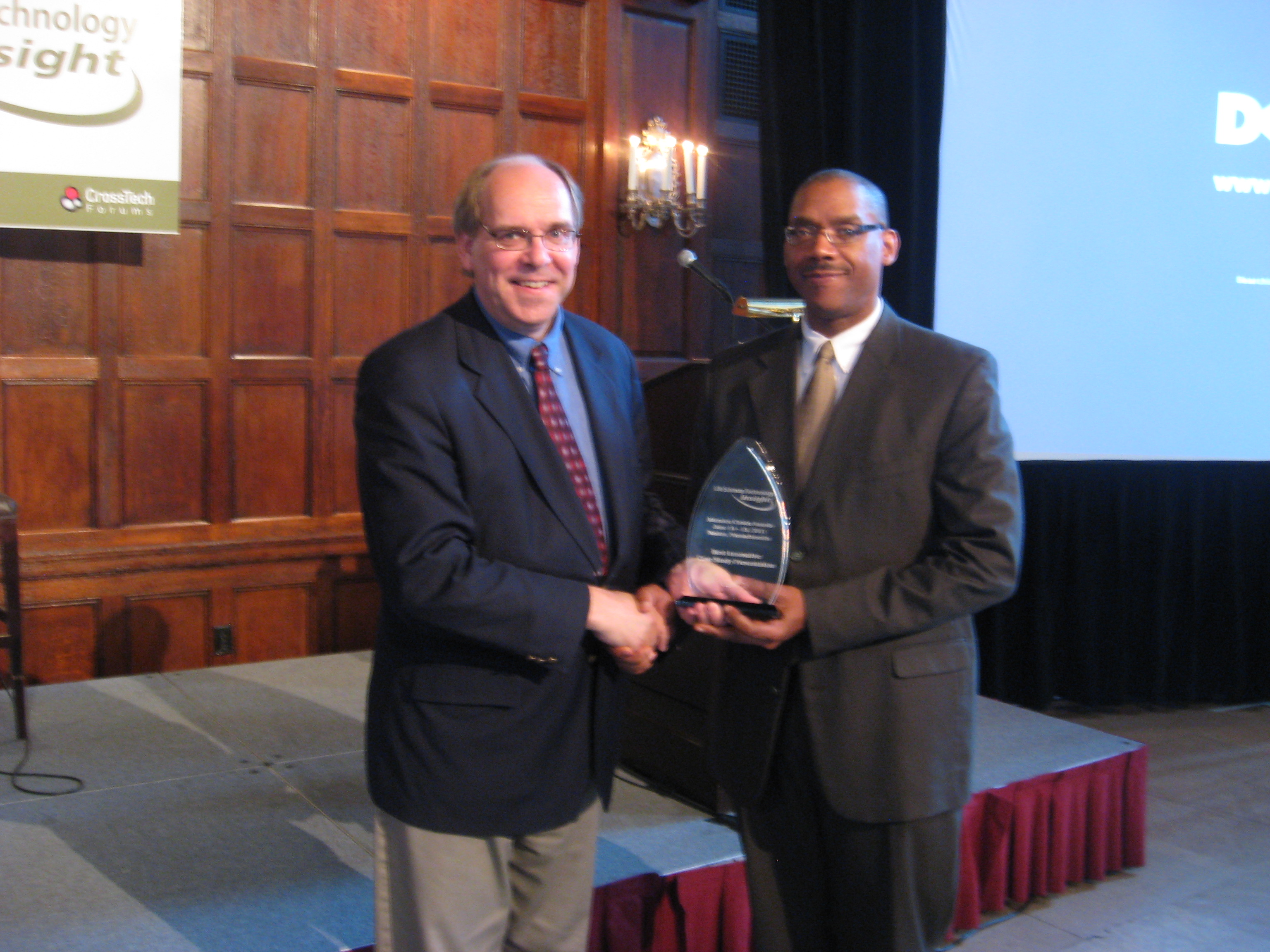 A recent post described my participation in the Life Sciences Technology Insight event at the Harvard Club in Boston Massachusetts. As Clintara‘s Director of Technology I gave a presentation (along with a colleague from Astra Zeneca) describing Clintara’s services and new technologies (including utilization of a smartpen and our new iPad prototype).
We were pleased to win the audience’s award for Best Innovative Case Study Presentation. (Above picture shows me receiving the award from Bill Sell, Vice President & General Manager of CrossTech Forums.) As promised, I have posted the video from that event in this post.
Below is a brief overview/preview (5 minutes) of the presentation. (Note: The entire presentation can be viewed by scrolling further down this page.)
The entire presentation (40 minutes) can be viewed below.
@tonyparham Twitter Digest (2011-07-10)
July 11th, 2011- When the Business Fails: The impact of entrepreneurial failure on the owner’s personal life: http://bit.ly/k1nmi9 ->
- RT @DanB: Ubiquity of webcams on laptops makes apps like Knovio now mainstream (My demo: http://bit.ly/jlAqwP) ->
- CSN Stores' recent funding round yields $165M; $80M goes to co-founders (& vested employees) http://1.usa.gov/n3HbF9 via@ScottKirsner ->
- Fooducate mobile app http://bit.ly/rsogGz scans product labels at grocery store and provides you with useful nutrition information ->
- Stunning Australian time-lapse video of the night sky over the ocean http://bit.ly/olqvhy via @dangruen ->
- RT @MichaelHyatt: Amen to this: “What a good wife gets you” by @JoelJMiller http://mhyatt.us/owTndp ->
Fourth of July Fireworks!
July 3rd, 2011One of the things which I enjoy is the annual July 4th fireworks display in Boston. Below are some interesting links and video which show the behind the scenes activities, and some related stories/info.
- The rhythm of the rockets – A master pyrotechnician synchronizes the dazzling fireworks with music for Boston’s 2011 Fourth of July celebration on the Esplanade.
- The official website for the Boston Fourth of July celebration on the Esplanade
- 2009 WSJ article re: NYC’s fireworks behind the scenes activities
- A Bulgarian blogger experiences the 2010 Boston fireworks as the best in the world
- An interesting July 4th story / parable (and more links)
- Below video shows an interesting 2009 tour of the Boston fireworks barge. (If the video is not visible, refresh your browser view, and/or click here. Adobe Flash is required to play the video. Can also try this link, which requires free registration.)
Clintara wins award for Best Innovative Case Study Presentation
June 23rd, 2011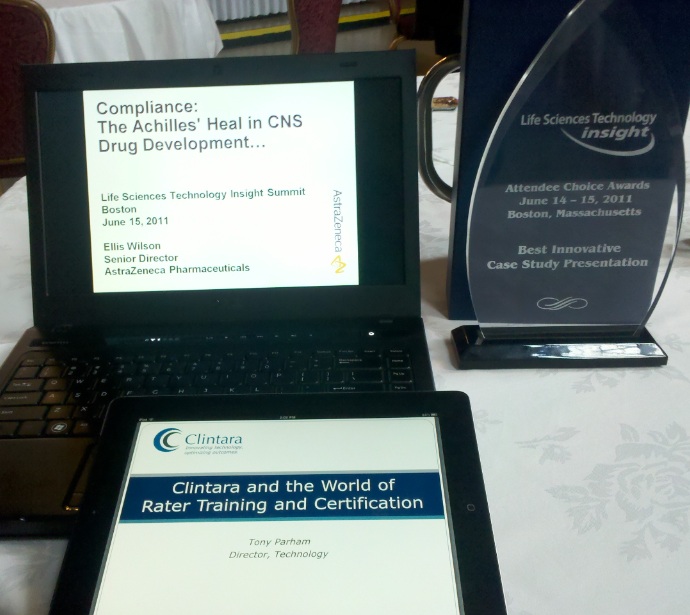
At last week’s Life Sciences Technology Insight event, Clintara won the audience’s award for Best Innovative Case Study Presentation.
As Clintara’s Director of Technology / CTO, I gave the initial segment of the presentation, in which I shared regarding the problems which pharmaceutical companies experience when launching new drugs (particularly in regards to drugs for central nervous system diseases). I gave an overview of Clintara’s services (training, certification and diligence), described our smart pen functionality, and gave the audience a preview of our brand-new, native iPad training prototype.
I then introduced Astra Zeneca’s Ellis Wilson, who gave an excellent overview of the challenges which the pharmaceutical industry has experienced in regards to the increased incidence of noncompliant patients, inappropriate patients, and financially motivated patients. Ellis presented data from several clinical trials and described how these patients created issues with the clinical trial data. Ellis also shared how new technologies (such as those provided by Clintara) were beneficial in decreasing unwanted data variability.
I will post a link to the video of the presentation when it becomes available…. (Edit: Here it is!)
@tonyparham Twitter Digest (2011-06-12)
June 13th, 2011- 5 LinkedIn Tips You Didn't Know http://bit.ly/juUEyM #in ->
- Get Googled, Get Hired: Pump Up Your Personal Brand http://bit.ly/j4xw2n ->
- Free summer entertainment series at Boston Harbor Hotel (Soul, blues, greatest hits, movies) http://bit.ly/j8zv75 ->
- 11 Great Commencement Speeches from 2011 http://bit.ly/iQpYAo ->
- Holding a grudge in your heart is like holding a rattlesnake by the tail: Stupid at best, deadly at worst. vi… (cont) http://deck.ly/~S20Vp ->
- RT @cspenn: MI6 hacks Al-Qaeda, replaces bomb recipes with cupcake recipes: http://ar.gy/QV6 ->
- Focus on the user experience, not the technology. http://bit.ly/l5AOJq via @chrisbrogran ->
Life Sciences Technology Insight
May 30th, 2011June 13-14, 2011, Harvard club, Boston Massachusetts
Now there is an executive summit for busy Life Sciences IT professionals. It is a two day program that will cover technology advances on both sides of the drug approval process:
- eClinical Ecosystem and the stages in clinical trials management.
- Business Ecosystem looking at the issues of manufacturing and supply chain management, sourcing, direct-to-consumer programs, quality management/safety, distribution and revenue leakage issues.
As Director of Technology for Clintara, I will be one of the keynote presenters at this event. Go to the life sciences technology insight website for more information.
Anticipated panels with participation of Clintara-affiliated personnel at Life Sciences Technology Insight event:
- 2:30 PM on Tuesday, June 14 panel on “R&D Productivity – How Can IT Make Improvements”
- 10:00 AM Wednesday “Digital Clinical Trials in 2016 – Are You Keeping Up with Innovation?”
- 10:30 AM Wednesday panel “Everything’s Going ‘e’ – Exploring the New Developments in eClinical Trials Systems”
Anticipated Clintara-affiliated particpants at Life Sciences Technology Insight event:
- Jerry S. Grupp, Senior Director, Project Management, ICON Central Laboratories
- Ellis Wilson, Senior Director, Project Coordination, AstraZeneca Pharmaceuticals
- Stephen Saber, Chief Operating Officer, Clintara LLC
- Tony Parham, Director of Technology, Clintara LLC
Click here if you are not able to see the above video.
Repetitive Strain Injury
May 30th, 2011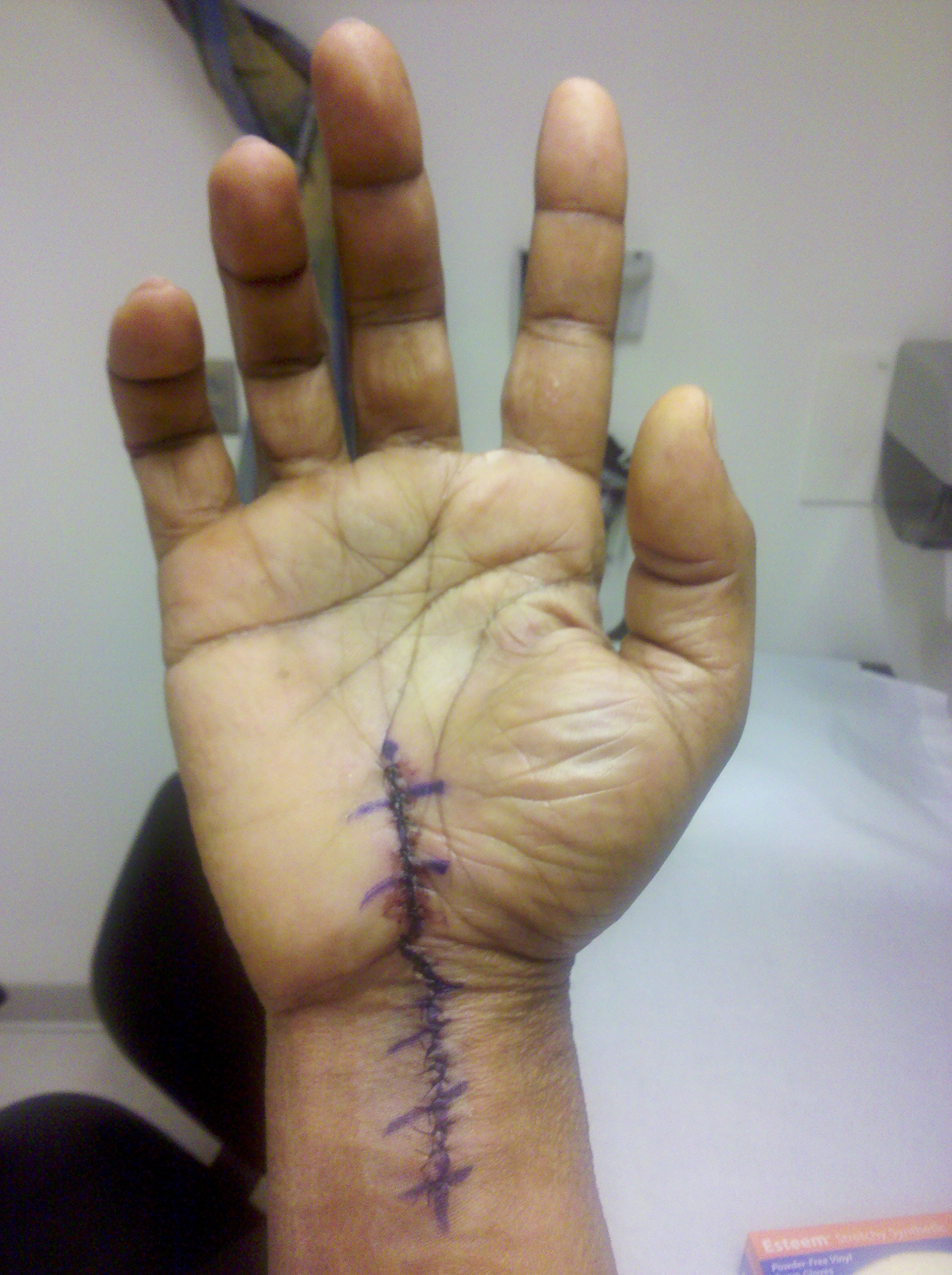 Repetitive strain injury (RSI) continues to be a malody which afflicts many persons who do certain fine-motor-muscle tasks (typing, playing musical instruments, chopping food, assembling parts on a manufacturing line, etc.) repetitively over a long period of time. The results (in certain persons) can be inflammation of tendons, pain, numbness, tingling, weakness and inability to function with that particular lamb (finger, wrist, arm, etc.). Afflictions which fall in the umbrella of RSI include carpal tunnel syndrome, cubital tunnel syndrome, thoracic outlet syndrome, tendinitis and others. RSI may also be referred to as cumulative trauma disorder (CTD).
Some statistics point to RSI as being the most costly injury faced by industry. For example, I was in a recent presentation by a voice-recognition software manufacturer, in which they indicated that Intel (one of their customers) has actually deployed software throughout its firm which monitors the number of keystrokes which each employee types. Once the employee has exceeded a certain threshold of keystrokes for that time period, the employee is required to go home for the rest of the week. I was unable to verify this fact, but it sounds plausible.
RSI is more easily prevented than cured. Accordingly, here are some resources to give you more information on the topic.
- Repetitive Strain Injury: A Computer User’s Guide (by Emil Pascarelli; One of the most widely referenced books on the topic for the last 20 years)
- http://rsi.unl.edu/
- http://www.rsi.deas.harvard.edu/what_is.html
- http://www.eecs.umich.edu/~cscott/rsi.html
- http://howto.wired.com/wiki/Prevent_RSI
- carpal tunnel syndrome (Mayo Clinic)
- carpal tunnel release surgery
- Typical recovery and prognosis for improvement after carpal tunnel release surgery is described here
- Dragon NaturallySpeaking (speech recognition):
http://www.nuance.com/dragon/index.htm
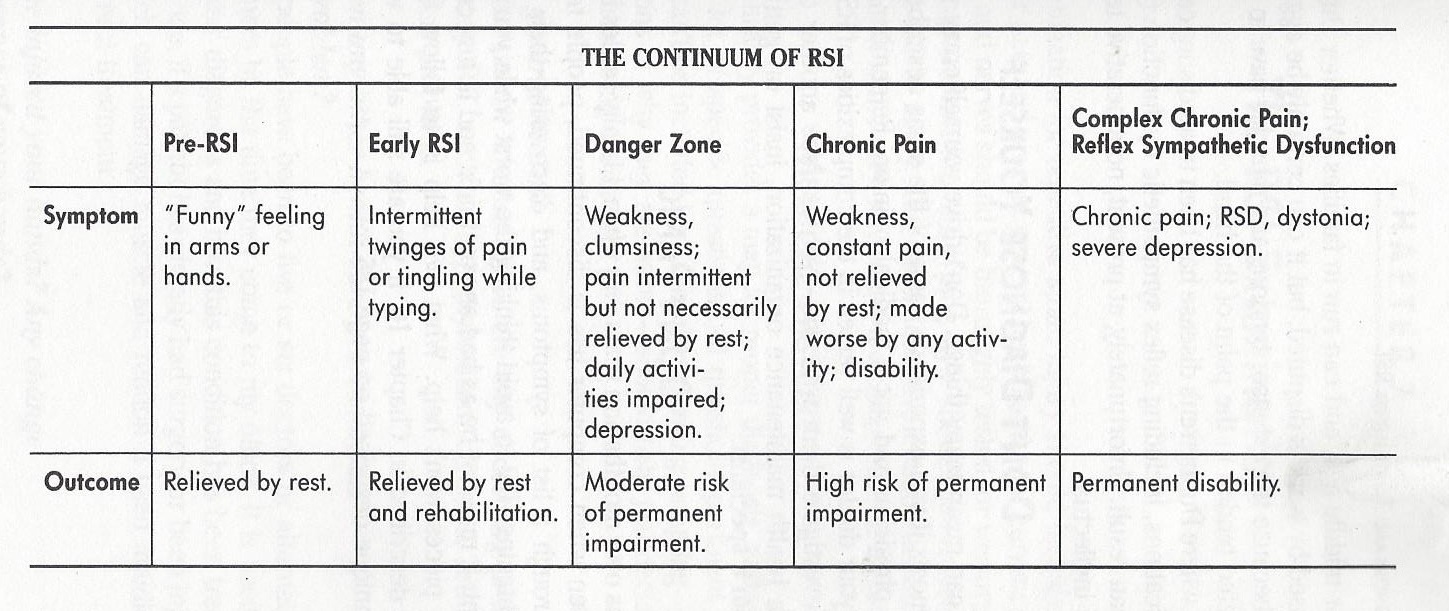
“The Continuum of RSI” table from Dr. Emil Pascarelli’s book
Additional information for MUSICIANS
- A Painful Melody – Prevention & Treatment of Musicians’ Injuries
“How quickly you recover from injury is directly related to how long you continued to play through pain or discomfort. In cases of severe injury, complete recovery is not possible. However, if you are proactive, acknowledge that something is wrong, and come up with a plan to correct things before you are severely injured, your recovery will be much quicker and less likely to require drastic measures.1 If an injury has continued for several months, further complications can arise such as adhesions (layers of body tissues grow together due to chronic inflammation or microtrauma), scar tissue from cumulative trauma, and atrophy of muscles no longer used.1 The steps below outline recovery from a severe injury.” - MusiciansHealth.com
- Musicians and Injuries
“PAY ATTENTION TO YOUR BODY. Pain is your body yelling that it’s in big trouble, but learning what is comfortable or awkward for your body before you’re in pain may prevent injury.”
@tonyparham Twitter Digest (2011-05-29)
May 30th, 2011- "Some cause happiness wherever they go; others, whenever they go" – Oscar Wilde. /via @JohnStanko ->
- First Lady Michelle Obama Gave Historic Address to Spelman College Graduates http://bit.ly/jqfBgk ->
- CHART: Bush Policies Dominant Cause Of National Debt http://bit.ly/ij7jvG ->
- How Apple works: Inside the world's biggest startup http://bit.ly/l9auo4 ->
- Group photo sharing site: ZangZing http://tcrn.ch/mQ0hIS http://tcrn.ch/mMsaSp http://on.wsj.com/kQNEE7 ->
- ScanDigital's Photo Scanning Service Makes It Easy To Share Old Pictures http://bit.ly/imjgh1 http://bit.ly/lFpOlB ->
@tonyparham Twitter Digest (2011-04-24)
April 25th, 2011- The 5 Golden Facebook Engagement Metrics http://bit.ly/eB4Oxh ->
- Tech employers emerge from "nuclear winter" into a frantic "spring" of competitive hiring: http://usat.ly/dYkO2r #technology via @SteveCase ->
- New experiment for Inbound Marketing Summit San Francisco – Pay what you think it is worth: http://bit.ly/hAmmSw ->
- RT @CommunispaceCEO: Jay Leno: "Last night, I slept like an air traffic controller." ->
- 3 things I learned while my plane crashed in NY's Hudson River in Jan 2009: Ric Elias on TED.com http://bit.ly/eWhMgv #life ->
- The mainstreaming of social media work http://bit.ly/i5LHu2 via @chrisbrogan ->
- Knocked Down, but not Knocked Out: compelling failure-lessons http://bit.ly/gw0DYR ->
- My new favorite travel search engine http://bit.ly/e6MEeW ->
- Trump Dogged By Rumors His Hair is Not From U.S.
So-called ‘Balders’ Movement Gathers Steam. http://bit.ly/gYJo3L /via @leaddog99 ->
